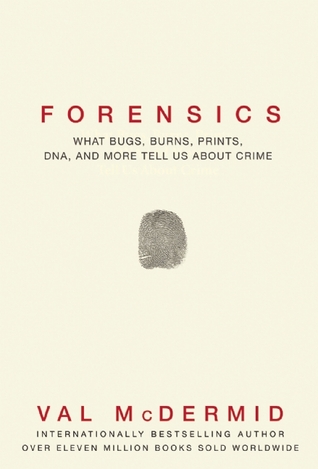
After I read Blood on the Table, I was still in the forensic mood and happily had Forensics waiting patiently on my Kindle.
Here's the description from Goodreads:
Val McDermid is one of the finest crime writers we have, whose novels have captivated millions of readers worldwide with their riveting narratives of characters who solve complex crimes and confront unimaginable evil. In the course of researching her bestselling novels McDermid has become familiar with every branch of forensics, and now she uncovers the history of this science, real-world murders and the people who must solve them.
The dead talk—to the right listener. They can tell us all about themselves: where they came from, how they lived, how they died, and, of course, who killed them. Forensic scientists can unlock the mysteries of the past and help serve justice using the messages left by a corpse, a crime scene, or the faintest of human traces. Forensics draws on interviews with some of these top-level professionals, ground-breaking research, and McDermid’s own original interviews and firsthand experience on scene with top forensic scientists.
Along the way, McDermid discovers how maggots collected from a corpse can help determine one’s time of death; how a DNA trace a millionth the size of a grain of salt can be used to convict a killer; and how a team of young Argentine scientists led by a maverick American anthropologist were able to uncover the victims of a genocide. It’s a journey that will take McDermid to war zones, fire scenes, and autopsy suites, and bring her into contact with both extraordinary bravery and wickedness, as she traces the history of forensics from its earliest beginnings to the cutting-edge science of the modern day.
Forensics is broken down by subject- so one chapter will be on fingerprints, one on DNA, one on fires, etc. Inside each chapter McDermid covers the history of that type of science in a mostly chronological order. She includes a couple examples of cases in the explanation, so it's a good mix of historic and modern case histories. The detail rarely veers into the obscene and gory, while still managing to fully explain each topic. Many of the details were completely fascinating and it reminded me much of Death's Acre, which I read too long ago to have reviewed on the blog.
I have never read any of McDermid's fiction, but this certainly makes me want to take a look at her writing. I mostly get my forensics fix from the J.D. Robb In Death books, which is a bit skewed from being set in the future. I am slightly curious in dipping my toe into the tv version of this, but who has time? And which show?? (No really, I don't have time for tv.) If I had any complaint about the book, it's that I felt like at time she went on a bit too long theorizing or explaining, with too few real life examples. I prefer the technical details to the theory, and the last chapter was heavy on the talk. Overall, a good, but not great, read that took me much longer than I anticipated while still introducing me to an author I'd like to try out in fiction.
Showing posts with label non-fiction. Show all posts
Tuesday, July 21, 2015
Tuesday, July 14, 2015
Blood on the Table: The Greatest Cases of New York City's Office of the Chief Medical Examiner by Colin Evans
This was a complete impulse grab from Overdrive and I suspect if I'd had read the details more closely I may have skipped it. As it was, this was the only book I read on my vacation, and it's slightly disappointing.
Here's the summary from Goodreads:
For almost a century, New York City's Office of the Chief Medical Examiner has presided over the dead. Over the years, the OCME has endured everything-political upheavals, ghastly murders, bloody gang wars, the 9/11 terrorist attacks, and non-stop battles for power and influence-and remains the final authority in cases of sudden, unexplained, or violent death.
Founded in 1918, the OCME has evolved over decades of technological triumphs and all-too human failure to its modern-day incarnation as the foremost forensics lab in the world, investigating an average caseload of over 15,000 suspicious deaths a year. This is the behind-the-scenes chronicle of public service and private vendettas, of blood in the streets and back-room bloodbaths, and of the criminal cases that made history and headlines.
So the summary sounds really terrific, right? I recently (last year?) read Working Stiff which is also a non-fiction memoir about the OCME and assumed this would be similar. It was not. Blood on the Table is much more a history of the Chief Examiners than of the cases and the science behind them. Yes, there are some case details, but the vast majority of the book deals with the political and personal agendas behind choosing the Chief and the history of the office itself.
As I read the book, I kept thinking that surely the next chapter/second half of the book would deal with more details than politics, so I kept reading. Ultimately I was disappointed, because honestly I just don't care about the politics of NYC. (Sorry, New York friends!) Would I recommend it to anyone else? Maybe to a very small subset of people. It's not that it was bad, but it was overall forgetful and unexciting- which is amazing for a book about murder.
Here's the summary from Goodreads:
For almost a century, New York City's Office of the Chief Medical Examiner has presided over the dead. Over the years, the OCME has endured everything-political upheavals, ghastly murders, bloody gang wars, the 9/11 terrorist attacks, and non-stop battles for power and influence-and remains the final authority in cases of sudden, unexplained, or violent death.
Founded in 1918, the OCME has evolved over decades of technological triumphs and all-too human failure to its modern-day incarnation as the foremost forensics lab in the world, investigating an average caseload of over 15,000 suspicious deaths a year. This is the behind-the-scenes chronicle of public service and private vendettas, of blood in the streets and back-room bloodbaths, and of the criminal cases that made history and headlines.
So the summary sounds really terrific, right? I recently (last year?) read Working Stiff which is also a non-fiction memoir about the OCME and assumed this would be similar. It was not. Blood on the Table is much more a history of the Chief Examiners than of the cases and the science behind them. Yes, there are some case details, but the vast majority of the book deals with the political and personal agendas behind choosing the Chief and the history of the office itself.
As I read the book, I kept thinking that surely the next chapter/second half of the book would deal with more details than politics, so I kept reading. Ultimately I was disappointed, because honestly I just don't care about the politics of NYC. (Sorry, New York friends!) Would I recommend it to anyone else? Maybe to a very small subset of people. It's not that it was bad, but it was overall forgetful and unexciting- which is amazing for a book about murder.
Thursday, September 25, 2014
Three recent non-fiction reads
In the last couple of months I have read three non-fiction books that I would group loosely into the same class of books.
First, Things a Little Bird Told Me by Biz Stone. I admit it, I picked this up because Janssen told me to read it. This is written by one of the creators of Twitter and he seemed like a really likable guy. The first 3/4 of the books are about his experience with blogging, Google, and the actual creation of Twitter, and then he kind of veers off on a tangent of doing good things for the greater good. It's not that I don't agree that people should do these things, but it changed the tone of the book. Despite this, I still recommend the book to others and I did like it quite a bit. The morning after I wrapped it up I happened to see a podcast with him on my phone and listened to that during my run. It was a nice way to finish it off.
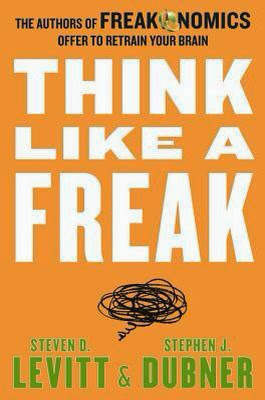
Then I read Think Like a Freak by Steven Levitt and Stephen Dubner. I read Freakonomics and Superfreakonomics and assumed I'd enjoy this as much. I did not. I felt it was largely a rehash of the first two, just approached differently. It did not help that I listen to the Freakonomics podcast (again, on my runs) and so much of the book was covered much more interestingly on the podcast. I'd skip this one and listen to the podcast instead.
Last, Predictably Irrational by Dan Ariely. This also came highly recommended by Janssen and usually her recs are spot on. Unfortunately, while this did have some interesting bits I found the writing itself dull and when I realized my library copy would poof in a couple days I intentionally chose to not even try to finish. Sorry Janssen!
First, Things a Little Bird Told Me by Biz Stone. I admit it, I picked this up because Janssen told me to read it. This is written by one of the creators of Twitter and he seemed like a really likable guy. The first 3/4 of the books are about his experience with blogging, Google, and the actual creation of Twitter, and then he kind of veers off on a tangent of doing good things for the greater good. It's not that I don't agree that people should do these things, but it changed the tone of the book. Despite this, I still recommend the book to others and I did like it quite a bit. The morning after I wrapped it up I happened to see a podcast with him on my phone and listened to that during my run. It was a nice way to finish it off.
Then I read Think Like a Freak by Steven Levitt and Stephen Dubner. I read Freakonomics and Superfreakonomics and assumed I'd enjoy this as much. I did not. I felt it was largely a rehash of the first two, just approached differently. It did not help that I listen to the Freakonomics podcast (again, on my runs) and so much of the book was covered much more interestingly on the podcast. I'd skip this one and listen to the podcast instead.
Last, Predictably Irrational by Dan Ariely. This also came highly recommended by Janssen and usually her recs are spot on. Unfortunately, while this did have some interesting bits I found the writing itself dull and when I realized my library copy would poof in a couple days I intentionally chose to not even try to finish. Sorry Janssen!
Tuesday, March 18, 2014
Struck by Genius by Jason Padgett
Struck by Genius: How a Brain Injury Made Me aMathematical Marvel is a non-fiction book along the lines of A Beautiful Mind,
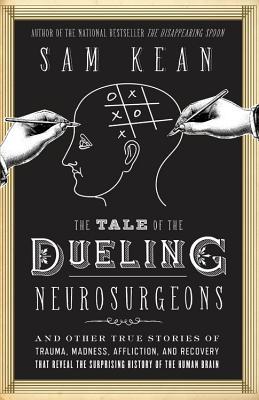
which I loved, and The Tale of the Dueling Neurosurgeons, which I did not love
as much. Padgett suffers through a violent mugging that leaves him seeing
things most people can’t see- the very structure of the universe. After a
period of depression and seclusion, he finds himself fascinated with math and
geometry in ways that make the average person’s brain hurt. He instinctively knows
theories that he’s never before encountered, with no education to back them up,
and without the vocabulary to describe them. He can draw fractals. He is
eventually diagnosed with acquired savant syndrome and acquired synesthesia. In
exchange he also gets a healthy dose of OCD, paranoia and PTSD.
I found the majority of the book to be incredibly
fascinating. It’s nearly impossible for me to comprehend the idea of looking at
a flood light and seeing pi. Fractals and imaginary numbers and math theory seem more
like fiction than reality (and I say that having taken years of calculus in
college.) Padgett not only understands these things instinctively, he
literally sees them. The math talk isn't so heavy that you can't follow along, nor is it at all boring. I wish there had been a little more about how this affected his personal life once he left his house, and I think the last chapter took a philosophical turn that was absolutely unnecessary but otherwise I'd easily recommend this to anyone who enjoys non-fiction of this sort.
Struck by Genius will be released on April 22, 2014.
Wednesday, January 22, 2014
The Tale of the Dueling Neurosurgeons by Sam Kean
The Blurb:
From
the author of the bestseller The Disappearing Spoon, tales of the brain and the history
of neuroscience.
Early studies of the functions of the human brain used a simple method: wait for misfortune to strike-strokes, seizures, infectious diseases, lobotomies, horrendous accidents-and see how the victim coped. In many cases survival was miraculous, and observers could only marvel at the transformations that took place afterward, altering victims' personalities. An injury to one section can leave a person unable to recognize loved ones; some brain trauma can even make you a pathological gambler, pedophile, or liar. But a few scientists realized that these injuries were an opportunity for studying brain function at its extremes. With lucid explanations and incisive wit, Sam Kean explains the brain's secret passageways while recounting forgotten stories of common people whose struggles, resiliency, and deep humanity made modern neuroscience possible.(
The Short of it: However you felt reading that
lonnnnnng title? That’s how you’ll feel reading the book. It’s two parts
interesting and one part can-you-hurry-it-up-already.
The Rest of it: For the first 3/4ths of the book I
found it completely fascinating and understandable. The tone is such that
even someone with no knowledge of the brain could easily follow along, and the
parts about how your brain changes (or doesn’t) to accommodate injury and
illness is pretty amazing. The last couple chapters veer more into talking about
the soul and consciousness, and the controversy that happened when researchers
started to pinpoint areas of the brain the controlled specific actions and
emotions and I felt like that part wasn’t quite as well done. This is likely
because of the unscientific nature of the soul itself and so is understandable,
if a bit boring. If I had a complaint about it it would be that I would have
liked to see more of the interesting cases and less of the process of
presenting the work and the background of the scientists themselves. (Tho to be
fair, several of those were fascinating as well.) Overall, quite
interesting and a nice break from my usual reading material.
Source: NetGalley
Thursday, July 04, 2013
The World's Strongest Librarian by Josh Hanagarne
I recently read a review of The World's Strongest Librarian: A Memoir of Tourette's, Faith, Strength, and the Power of Family that convinced me that this was the kind of book that I loved.
And, on the surface, it really is. A combination of things that
fascinate me- libraries and books, faith, and personal
experience with something that makes him different, in this case,
Tourette Syndrome. I happened to see it on my library shelf shortly
thereafter and picked it up. I mentioned recently that I’ve been doing a
large portion of my reading on the Nook lately,
but I realized there was no point in having all these paper books
checked out if I wasn’t going to make the effort to read them so despite
reading a truly excellent e-book during the day, I started reading this
one at home.
Hanagarne has an easy, conversational style. His
book started with a blog (doesn’t every memoir?) and that writing style
carries over. The book is laid out chronologically, starting with his
childhood and continuing on into his marriage
and late start career. This is the first thing I’ve really read about
Tourette’s. My idea of it was mainly of people yelling out curse words,
but of course it’s much more than that. Hanagarne tries to describe what
the tics are like, and how debilitating it
makes his life, but I am not 100% convinced that he does a good job of
it. He spends a page saying that he can’t fill the book with every tic,
that we just have to imagine adding on to what he’s already said when he
mentions something new. Much of his life
in his 20s is lost to the tics, and he enters and withdraws from
college a dozen times. His mission trip is cut short because of their
severity. He tells us these things, but it’s not very powerful to read
them. I feel like his descriptions are a bit lacking,
that what he’s said about the tics themselves and their impact on him
don’t actually match up.
I had a similar response to his writing about
faith. Hanagarne is a Mormon. He does an excellent job explaining
specific aspects of his faith and what it entails. He writes a very
powerful scene about accepting God in college, but then
he kind of backs off both in his belief and in his writing about it. When his struggles with Tourette’s and his and
his wife’s inability to have a child overwhelm him, he questions God,
but only in the mildest of ways. It felt to me like he’s pulling his
punches, that he doesn’t want to offend any of his
readers, trying to keep both the religious readers and the ones who
don’t care to read about religious struggles. By the end he's honest with the reader, and I can see that perhaps the uninspired writing comes from his apathy towards God, but it made for pretty boring reading, for me.
As an adult, Hanagarne falls into weight lifting as
a method of controlling his tics. He does traditional lifting before
moving onto kettleballs and then spends an entire chapter talking about
this strange individual who is not a trainer
nor doctor nor really a friend who offers opaque advice and waits for
Hanagarne to figure it out. Ultimately, he learns that he can control
his tics with breathing (until he can't), but the book really bogs down while he’s
figuring it out. He could have cut out 90% of the
chapter about the other guy and not lost a thing. I find his dedication
to the task remarkably impressive, as well as his recall of the process
(I’m guessing the blog helps), but he didn’t need to relive entire
conversations.
Monday, March 18, 2013
Dead bones and deadly animals, oh my!
One of the things I think the Nook would be terrific for is introducing my reluctant reader to other forms of media. He's already quite proficient at looking things up online and reading about what he wants to know (namely about Wizard101, but whatever). I think that reading on the Nook color might get him a bit more interested than a "boring" paper book. To that end, I keep an eye out for books on NetGalley that he might enjoy. He's not a fan of a lot of fiction his age, and we're not really interested in pushing a religious theme on him, so I mainly look to NetGalley for non-fiction. I have recently requested two books that I hoped he'd enjoy. Sadly, he wasn't interested in either one, but you might be.

Bones Never Lie: How Forensics Helps Solve History's Mysteries
by Elizabeth MacLeod had lots of promise. As most boys (I assume), he's fascinated by creepy things and actual bones fit that bill. I had thought that he might be able to push past the more mature theme in order to read cool things about bones, but he has little interest. This doesn't mean that *I* didn't sit and read half the book one evening. So many interesting things about ancient bones, Napoleon, crime scenes, forensics, etc. This is clearly written for a younger audience, but I still found it incredibly interesting and would recommend it to slightly older kids. Bones Never Lie was released on February 4, 2013.

I hoped that his fascination with mythological creatures would allow him to enjoy Deadly Adorable Animals
, but turns out he has zero interest in real animals. Duh. Not the same thing, MOM. This one is probably more his age level (he is 8) but I could not interest him at ALL. I admit, this one didn't interest me much either, and I didn't read the entire book. Deadly Adorable Animals was released on March 5, 2013.
Part of the problem with both of these books is that the pictures, which are vital, did not show up on the Nook. The NetGalley format is not a great choice for books with pictures, as to really read them you have to sit at a laptop. You would assume this would make make my computer loving kid more interested, but in the end it did not. I may try again with Bones, as I do think he'd enjoy it, but for now we'll go back to pushing the paper version.
Both books received from NetGalley in exchange for my review.
Part of the problem with both of these books is that the pictures, which are vital, did not show up on the Nook. The NetGalley format is not a great choice for books with pictures, as to really read them you have to sit at a laptop. You would assume this would make make my computer loving kid more interested, but in the end it did not. I may try again with Bones, as I do think he'd enjoy it, but for now we'll go back to pushing the paper version.
Both books received from NetGalley in exchange for my review.
Thursday, October 25, 2012
Triangle: The Fire that Changed America by David Von Drehle
On March 25, 1911 a fire broke out in a factory on the 8th floor of the Asch building in New York City. The 8th, 9th, and 10th floors of the building were occupied by the Triangle shirtwaist company and 146 workers died, most of them young women. This would be the worst workplace disaster in NYC until September 11th. Unsafe conditions, including a possibly (probably) locked door, literally tons of highly flammable materials, and rickety fire escapes contributed to the tragedy and the owners of the shirtwaist company were put on trial and found... not guilty.
The Triangle fire is something that I knew a tiny bit about- approximately that paragraph's worth- prior to reading von Drehle's book (Triangle: The Fire That Changed America
The part about the fire is very well researched and makes a compelling case for the owners of the company being at fault. The trial is detailed as well, with the lawyer for the defense being the appropriately shady, but flashy, person. (Think Johnny Cochran .) The book goes on to make a case that despite the "innocence" of the owners, factory reforms started from that point until the entire experience of the working class changed, along with much of politics (at least in NYC.) There's a detailed political history lesson throughout the book, about Tammany Hall and buying votes and socialism and all that. I admit this isn't the part that interests me most, so I'm not sure if he really made his case or not, but I did learn a good deal about it. Even with this political turn, the book is really fascinating, and a great starting point for exploring more of our history. I'd highly recommend it to any history buff.
Next up on my non-fiction list this year is The Warmth of Other Suns: The Epic Story of America's Great Migration
Tuesday, July 26, 2011
Free-Range Kids: Giving Our Children the Freedom We Had Without Going Nuts with Worry by Lenore Skenazy
The Pirate has started telling me over and over that we can't talk to strangers. This is not something that I've taught him and actually isn't something that I want him to learn. I assume this is something they have talked about at school and every time he says it I see flashing lights in my head that spell out "Stranger Danger!!!" Here's the thing though, I'm just not worried that someone will abduct my kids. If I hesitate to let them play outside alone, it's more for the neighbor's comfort than my own. (Hey, my children are LOUD. I'm just thinking of how to be neighborly here.) I won't let the Bug go into the boy's restroom yet, but that's because he doesn't quite have the mechanics down (and he still likes to look or crawl under stall doors to visit other people. Now THERE's the Stranger Danger!) and not because I worry about someone snatching him. I tend to base most of my decisions on what they are capable of doing alone, not fear. I only give my kids limited outdoor freedom, but this is more because I don't trust them NOT to help themselves to things in other yards and not to get lost than because I don't trust the neighbors.


All of this fits nicely with the points laid out in Free-Range Kids: Giving Our Children the Freedom We Had Without Going Nuts with Worry
. She advocates letting our kids do things that we were allowed to do as kids. Play outside. Walk to school. Go in the bathroom alone. Eat whole grapes. Skenazy interviewed a lot of experts, people whose job it is to do things like research how many pieces of Halloween candy have really had razor blades in them (none) or poison in them (once, but it was a family member aiming for his own kids, not a stranger.) The book is full of details about how few kids walk to school now compared to our generation, and about how quiet neighborhoods are now that all the kids are inside instead of in the front yard.
The most striking chapter is near the end and I'm going to steal some of the details with you, if only to get you to read the book. One kid in 1.5 MILLION is abducted killed by strangers. They are 40 times more likely to die in a car crash, but my kids are in the car almost every day. They are ten times more likely to die in a house fire, but we slept in our very own beds last night. They are 20 times more likely to drown, but we spent the whole weekend at the lake, in and out of the water. Sexual abuse by strangers is down something like 79% since we were kids. (I can't find that exact quote, I could be off a few numbers.) There are some good strategies on how to teach your kids to be safe- it's fine to TALK to strangers, just don't GO with them! (This is a good thing, as the Bug has a tendency to walk up and introduce himself to everyone he sees.) I don't want to repeat the whole chapter here, you really should just read the book.
The entire book is worth reading. It's fairly short, less than 200 pages, and is full of humor. Skenazy has been named "America's Worst Mom" for allowing her kid to ride on the subway alone and isn't afraid to use that title to poke fun at herself. If you're a parent, I recommend that you pick this one up. It's short and fun and full of encouraging information and ideas. You can read more at Lenore Skenazy's blog and get a feel for how she writes, as well as her take on the Lieby Kletzky tragedy. It's a great blog, as well as a great book.
Free Range Kids
by Lenore Skenazy
Jossey- Bass
2009
213 pages
I am an Amazon Associate. As such, any purchase you make at Amazon.com after following a link from this blog will earn me a (tiny) percentage back as income. Thanks. All content copyright Books. Lists. Life. at http://bookslistslife.blogspot.com. If you're reading this post anywhere other than there, you are reading stolen content.
All of this fits nicely with the points laid out in Free-Range Kids: Giving Our Children the Freedom We Had Without Going Nuts with Worry
The most striking chapter is near the end and I'm going to steal some of the details with you, if only to get you to read the book. One kid in 1.5 MILLION is abducted killed by strangers. They are 40 times more likely to die in a car crash, but my kids are in the car almost every day. They are ten times more likely to die in a house fire, but we slept in our very own beds last night. They are 20 times more likely to drown, but we spent the whole weekend at the lake, in and out of the water. Sexual abuse by strangers is down something like 79% since we were kids. (I can't find that exact quote, I could be off a few numbers.) There are some good strategies on how to teach your kids to be safe- it's fine to TALK to strangers, just don't GO with them! (This is a good thing, as the Bug has a tendency to walk up and introduce himself to everyone he sees.) I don't want to repeat the whole chapter here, you really should just read the book.
The entire book is worth reading. It's fairly short, less than 200 pages, and is full of humor. Skenazy has been named "America's Worst Mom" for allowing her kid to ride on the subway alone and isn't afraid to use that title to poke fun at herself. If you're a parent, I recommend that you pick this one up. It's short and fun and full of encouraging information and ideas. You can read more at Lenore Skenazy's blog and get a feel for how she writes, as well as her take on the Lieby Kletzky tragedy. It's a great blog, as well as a great book.
Free Range Kids
by Lenore Skenazy
Jossey- Bass
2009
213 pages
I am an Amazon Associate. As such, any purchase you make at Amazon.com after following a link from this blog will earn me a (tiny) percentage back as income. Thanks. All content copyright Books. Lists. Life. at http://bookslistslife.blogspot.com. If you're reading this post anywhere other than there, you are reading stolen content.
Monday, December 06, 2010
Official Book Club Selection by Kathy Griffin
Unlike most of the memoirs I read, where the author follows one thread or experiment through the book, this one is a straight up memoir of her life, from childhood until the present. Griffin really presents herself as an unattractive dorky child. She lives with her parents until she is 28. Despite this, she also claims to have been very promiscious, sleeping with anyone she meets. Griffin works very hard to build a career in show business, long after most people would have given up. Her efforts seem to have finally paid off with My Life on the D-List.
I was a fan of Suddenly Susan when it was on the air, and I think that was really my only exposure to Griffin prior to this book. I found myself reading it with a bit of distrust. I find it hard to believe that anyone would be so willing to put every detail in print like this, but the prevailance of reality shows argues against this. I find it hard to believe that things happened exactly as she claims and that she's so willing to name names and talk smack about other entertainers.
Overall, very lightweight, probably more entertaining if you care about comedy. Great for when your brain can't take anything else. It was pretty funny in places, as it should be, and the Reading Group Guide at the end is not to be missed.
Official Book Club Selection: A Memoir According to Kathy Griffin
Kathy Griffin
Ballantine Books
2009
348 pages
Monday, November 29, 2010
Made by Hand by Mark Frauenfelder
As you may have noticed, I'm a big fan of handmade gifts and things for myself. As such, I thought that I'd really enjoy Made by Hand: Searching for Meaning in a Throwaway World by Mark Frauenfelder. I read an excellent review of it on Journey of 1000 Stitches and when I saw it at my library I snatched it up. Sadly, it wasn't what I thought it would be and I found the author to be a little snobby about his version of handmade.
Frauenfelder is the editor of MADE, so he has some background in doing things himself. During the course of the book he tackles several projects that he could have outsourced in order to examine the possibilities of doing things for himself. He starts a beehive and a chicken coop, he kills his lawn in favor of a garden, he builds cigar box guitars and carves wooden spoons. Frauenfelder is successful in his personal quest to get meaning out of using his hands. He learns to accept mistakes and imperfections and to enjoy what he is able to accomplish.
While I appreciate his efforts, and find the book to mostly be enjoyable. I think he also missed the point a bit, or perhaps his life is just so different from mine that I couldn't completely relate. If you've read my blog for any length of time you know that I'm a huge fan of handmade. I have an Etsy shop!
I'm sure everyone's line on what is a meaningful handmade item is different. I expected the book to be more about how to repurpose, reuse and make your own items from a more frugal perspective. Instead, I found myself annoyed at how easy it was for him to do his thing, with the money to buy whatever he needed. Regardless, it was still very interesting to see him learn to be satisfied, and even happy, making things himself instead of just replacing whatever he needed. The process of building a chicken coop and learning to raise chickens was still interesting, even if it wasn't in my definition of something handmade, ya know?
Overall, recommended, but not highly, and it may not be the handmade book you're expecting.
Made by Hand: Searching for Meaning in a Throwaway World
Mark Frauenfelder
Portfolio
2010
231 pages
Sunday, October 24, 2010
The TBR shelves, non-fiction
(Packed!)
I recently posted the fiction TBR shelves, here's the non-fiction that I'm hanging onto. I show a definite preference for parenting books, books about religious journeys, and stuff about money.
What non-fiction do you lean towards?
I am an Amazon Associate. As such, any purchase you make at Amazon.com after following a link from this blog will earn me a (tiny) percentage back as income. Thanks. All content copy write Books. Lists. Life. at http://bookslistslife.blogspot.com. If you're reading this post anywhere other than there, you are reading stolen content.
I recently posted the fiction TBR shelves, here's the non-fiction that I'm hanging onto. I show a definite preference for parenting books, books about religious journeys, and stuff about money.
What non-fiction do you lean towards?
- Sin in the Second City: Madams, Ministers, Playboys, and the Battle for America's Soul
by Karen Abbott
- The Battle for God
by Karen Armstrong
- A History of God: The 4,000-Year Quest of Judaism, Christianity and Islam
by Karen Armstrong
- Through the Narrow Gate, Revised: A Memoir of Spiritual Discovery
by Karen Armstrong
- Didn't I Feed You Yesterday?: A Mother's Guide to Sanity in Stilettos
by Laura Bennett
- Throw Out Fifty Things: Clear the Clutter, Find Your Life
by Gail Blanke
- It's a Boy: Women Writers on Raising Sons
edited by Andrea Buchanan
- Mother Shock: Loving Every (Other) Minute of It
by Andrea J Buchanan
- Shakespeare (The Illustrated and Updated Edition)
by Bill Bryson
- The Life and Times of the Thunderbolt Kid: A Memoir
by Bill Bryson
- The Body Project: An Intimate History of American Girls
by Joan Jacobs Brumberg
- Heat: An Amateur's Adventures as Kitchen Slave, Line Cook, Pasta-Maker, and Apprentice to a Dante-Quoting Butcher in Tuscany (Vintage)
by Bill Buford
- Dating Jesus: A Story of Fundamentalism, Feminism, and the American Girl
by Susan Campbell
- Pornology: Noun--1: A Good Girl's Guide to Porn; 2: The misadventures of the world's first anthroPORNologist; 3: A Hilarious Exploration of Men, Relationships, and Sex
by Ayn Carrillo-Galley
- Babyproofing Your Marriage: How to Laugh More and Argue Less As Your Family Grows
- FBI Girl: How I Learned to Crack My Father's Code
by Maria Conlon-MvIvor
- What You Should Know About Politics...But Don't: A Nonpartisan Guide to the Issues
by Jessamyn Conrad
- Strapped: Why America's 20- and 30-Somethings Can't Get Ahead
by Tamara Draut
- The End of Faith: Religion, Terror, and the Future of Reason
by Sam Harris
- An Unquiet Mind: A Memoir of Moods and Madness
by Kay Redfield Jamison
- Killing Monsters: Why Children Need Fantasy, Super Heroes, and Make-Believe Violence
by Gerard Jones
- The Story of My Life: The Restored Classic, Complete and Unabridged, Centennial Edition
by Helen Keller
- Can't Buy My Love: How Advertising Changes the Way We Think and Feel
by Jean Kilbourne
- Too Much of a Good Thing: Raising Children of Character in an Indulgent Age
by Daniel Kindlon
- Yearnings: EMBRACING THE SACRED MESSINESS OF LIFE
by Irwin Kula
- Dharma Punx
by Noah Levine
- Gift From the Sea (A Vintage Book)
by Anne Morrow Lindberg
- Buyology: Truth and Lies About Why We Buy
by Martin Lindstrom
- See Jane Write: A Girl's Guide to Writing Chick Lit
by Sarah Mlynowski
- Waiting for Birdy: A Year of Frantic Tedium, Neurotic Angst, and the Wild Magic of Growing a Family
by Catherine Newman
- Practically Perfect in Every Way: My Misadventures Through the World of Self-Help--and Back
by Jennifer Niesslein
- The Broke Diaries: The Completely True and Hilarious Misadventures of a Good Girl Gone Broke
by Angela Nissel
- The Cloister Walk
by Kathleen Norris
- Queen of the Road: The True Tale of 47 States, 22,000 Miles, 200 Shoes, 2 Cats, 1 Poodle, a Husband, and a Bus with a Will of Its Own
by Doreen Orion
- Look Me in the Eye: My Life with Asperger's
by John Elder Robinson
- Baby B
by Michael Ryan
- You're Not The Boss Of Me: Adventures Of A Modern Mom
by Erika Schickel
- Ciao, America!: An Italian Discovers the U.S.
by Beppe Severgnini
- Rumspringa: To Be or Not to Be Amish
by Tom Shachtman
- The Maternal Is Political: Women Writers at the Intersection of Motherhood and Social Change
by Shari MacDonald Strong
- Dixieland Delight: A Football Season on the Road in the Southeastern Conference
by Clay Travis
- Just Let Me Lie Down: Necessary Terms for the Half-Insane Working Mom
by Kristin van Ogtrop
- The Partly Cloudy Patriot
by Sarah Vowell
- Take the Cannoli : Stories From the New World
by Sarah Vowell
- The Suicide Index: Putting My Father's Death in Order
by Joan Wickersham
- The Other Woman: Twenty-one Wives, Lovers, and Others Talk Openly About Sex, Deception, Love, and Betrayal
by Victoria Zackheim
Subscribe to:
Posts (Atom)